

Can a gorilla trekking tour from Kigali fit into just two days without making the whole trip feel rushed? It can suit travelers with limited time, but the trek is only one part of the plan. Your flight connection, ground transfer, permit timing, and time to recover all affect how comfortable the journey feels.
If you’re weighing a short visit against a longer Uganda safari, consider whether a compact itinerary leaves enough room for travel changes. A focused trip brings you to the forest for a guided mountain gorilla trek, but requires careful coordination and leaves less time for other experiences.
This guide explains how to assess the flight-and-road journey, which planning decisions matter before booking, and where a two-day itinerary involves trade-offs. It also compares the short trip with longer trekking options, helping you choose a pace that fits your schedule and travel style.
Key Takeaways
- A gorilla trekking tour from Kigali can suit a tight schedule, but it is a focused trek rather than a full Uganda safari.
- Map the journey as a sequence of arrival, ground transfer, overnight arrangements, trek, and departure. Use the itinerary to see how each stage fits.
- Compare the two-day option with three-day and longer guided packages to decide how much flexibility and time for other activities you want.
- Before travel, review current entry and permit requirements through official sources, and prepare for the physical demands of trekking.
- Use the planning checklist to weigh the trade-offs and choose a trip pace that suits your schedule.
Is a Short Uganda Gorilla Trekking Tour Right for Your Trip?
A short, flight-connected gorilla trek is a focused wildlife journey, not a full Uganda safari. It centres on reaching the trekking area, taking part in a guided mountain gorilla trek, and fitting the return journey into a compact itinerary. The forest encounter may be the highlight, but the travel logistics shape the experience around it.
This kind of trip can suit you if you have limited leave or are fitting Uganda into a wider international itinerary. It asks you to make one experience the priority rather than trying to visit several parks and wildlife habitats in a few days. The guided two-day Uganda gorilla trekking tour with a flight connection offers that focused approach. Longer guided options allow more time for trekking and other activities.
What does a short flight-connected gorilla trek involve?
Think of the trip in stages: arrive by international flight, continue by ground transfer, follow the overnight arrangements in the itinerary, travel to the trek, and depart afterward. The sequence is straightforward in principle, but the actual schedule depends on the tour plan and its logistics. Don’t assume you can start the next leg as soon as your flight lands, or that you can leave on the same day as the trek.
The guided trek is a distinct wildlife experience, not a tour of multiple destinations. For context on the forest landscape and conservation setting, explore Bwindi Impenetrable National Park. A compact itinerary leaves limited time beyond the trek itself, so view it as a purposeful visit rather than a complete introduction to Uganda’s varied wildlife.
Who benefits most from a compact itinerary?
Choose a short trip if your schedule is tight and a mountain gorilla trek is your clear priority. It may also suit you if Uganda is one part of a longer journey and you want to set aside a defined stretch of time for the trek. Base your decision on the full journey, not just the hours spent trekking. Transfers, permit timing, and the trek all affect the pace.
A tight schedule leaves less room to absorb delays or recover between travel and activity. Consider whether you’re comfortable moving through the itinerary with little unscheduled time. Gorilla sightings can’t be guaranteed, so make sure the trip still feels worthwhile for its forest setting and guided trekking experience, not only for a particular wildlife outcome.
If you want to visit several parks, add activities, or travel at a gentler pace, more days may suit you better. Bwindi Mountain Gorilla Trekking Tours offers a three-day mountain gorilla trekking experience and longer guided packages, including a five-day gorilla and chimpanzee trek. These options give you more time in the itinerary, though the best fit depends on your schedule and what you want from the journey. Compare the proposed travel sequence with your flights, and leave breathing room for the trek and the journey home.
How the Flight-Connected Uganda Gorilla Trek Itinerary Fits Together
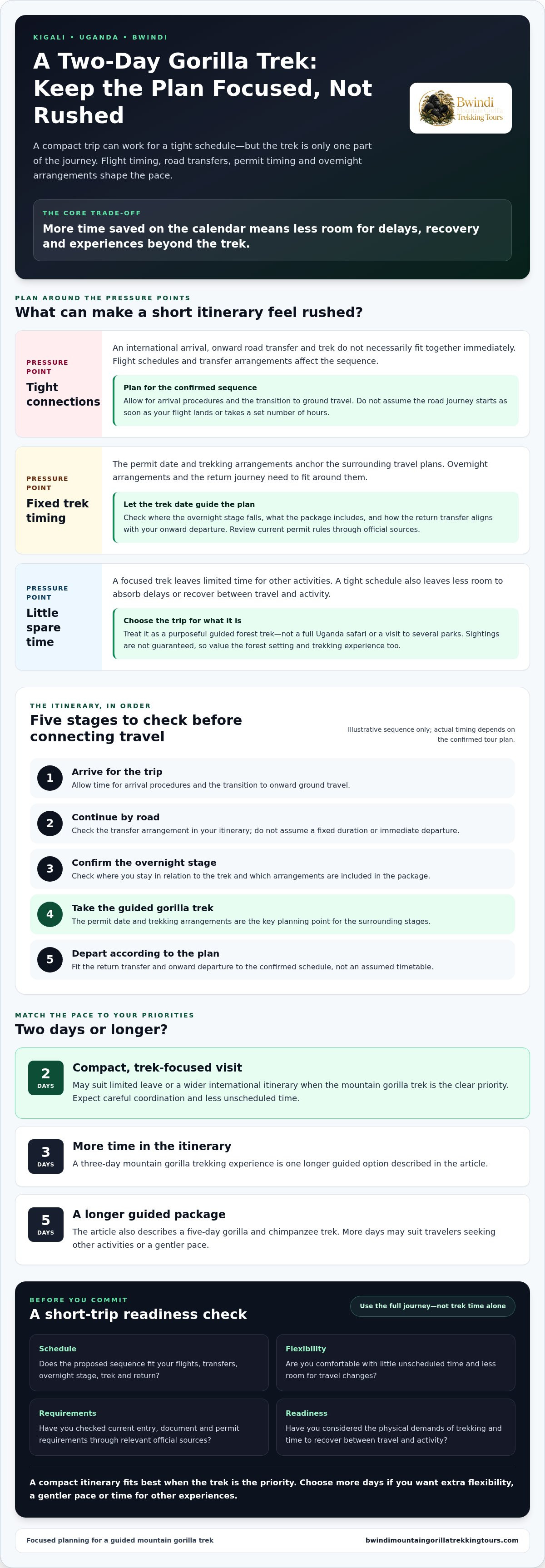
A flight-connected Uganda gorilla trekking tour links an international arrival with onward road travel and a guided trek. The sequence below is illustrative, not a fixed timetable or a promise of particular package inclusions. Flight schedules, transfer arrangements, permit timing, and the trek date all affect how the stages fit together. Use the confirmed itinerary to understand the plan before arranging connecting travel.
- Arrive for the trip. Allow time for arrival procedures and the transition to onward ground travel. The schedule depends on your flight and the tour arrangements.
- Continue by road. The transfer connects your arrival with the trekking itinerary. Don’t assume it takes a set number of hours or begins immediately after landing.
- Plan the overnight stage. The itinerary needs to place you appropriately for the trek. Check where this stage falls and which arrangements are part of your package.
- Take the guided trek. This is the central wildlife experience. The permit date and trekking arrangements anchor the surrounding travel plans.
- Depart according to the plan. Fit the return transfer and onward departure to the confirmed schedule, not an assumed timetable.
The sequence is easy to follow on paper, but its flexibility depends on coordination. The permit is tied to the trekking date, while arrival and ground-transfer plans determine how much room remains if a flight or road stage shifts. Treat the trek date as a key planning point, then fit the travel stages around it. Review current permit requirements and booking rules through the relevant official sources before committing to travel.
What happens before the trekking day?
Plan arrival and onward transfer as connected stages, not separate assumptions. Make sure your flight plan leaves a practical transition to the road journey. Keep your passport and relevant border documents ready, and review the entry requirements that apply to your travel. Avoid building your own timetable around an unverified same-day transfer. Follow the arrangements in your confirmed itinerary.
How should travelers think about the trek and departure?
Let the trek date guide the rest of your plans. Check how the itinerary places the overnight stage, transfer, and departure around it, then leave enough margin to follow the actual schedule. If your onward flight is fixed, compare its timing with the full return plan rather than assuming the trek ends with time to spare. For permit planning, consult current guidance from the relevant official authority.
Our guided two-day package flying to Kigali brings these stages together into a focused itinerary. Use the guided two-day Uganda gorilla tour to understand how the flight connection and trek are planned. Match your flights to the confirmed itinerary, and allow flexibility for the journey between stages.
Two-Day or Longer Gorilla Trekking Tour: Which Pace Suits You?
The right trip length depends on what you want to make room for. A two-day gorilla trekking tour with a flight connection is built around a focused guided trek, while longer packages allow broader routing or additional wildlife experiences. More days can create breathing room, but they won’t automatically suit every schedule or travel style. Compare the itinerary for each option before deciding.
| Trip option | Available time | Flexibility and activities |
|---|---|---|
| Two-day tour | A compact window centred on a guided gorilla trek. | Less room to absorb changes or add activities. Arrival and departure plans need to fit closely around the confirmed itinerary. |
| Three-day experience | An additional day compared with the two-day option. | Offers a longer framework for the trekking experience, with more time in the overall schedule. Check the itinerary to see how that time is arranged. |
| Five-day gorilla and chimpanzee trek | A longer trip with time for two distinct trekking interests. | Suited to travelers seeking more than a single gorilla-focused activity. The broader plan depends on the package itinerary. |
The central trade-off is focus versus scope. A short itinerary prioritizes the gorilla trek and keeps the journey compact. A longer package can include more wildlife interests or create a less compressed pace. Neither guarantees a particular wildlife encounter. The best fit depends on your available leave, travel connections, and comfort with a tightly planned schedule.
When does a two-day tour make sense?
Choose the compact format if a guided mountain gorilla trek is your main priority and you have limited time for Uganda. It can also fit into a wider international journey. Be realistic about the narrow planning window: your arrival, transfer, permit timing, trek, and departure must align. If you want flexibility to absorb disruptions or add activities, a two-day plan may feel too constrained.
When should you consider adding more days?
Allow more time if you want another wildlife experience or prefer not to build your entire visit around one tightly arranged trek. The three-day trekking guide and five-day gorilla-and-chimpanzee guide offer more detail on those package options. Read them alongside the proposed itinerary to compare what each trip length makes possible, without assuming extra days include a particular activity or arrangement.
Keep costs separate from the pace decision. Package prices and permit charges are a different comparison, so use the dedicated Uganda trekking prices guide for that topic rather than treating duration as a direct measure of value. First decide how much time you can set aside and whether one focused trek or a broader wildlife itinerary better matches your plans. Then review the relevant package guide for details that matter to your choice.
Plan the Short Trek: Documents, Timing, and Personal Readiness
A compact itinerary leaves less room to sort out travel details along the way. Before you set off, bring together your travel documents, confirmed tour schedule, and current guidance on entry and gorilla permits. Requirements can vary by traveler and change over time. Check official sources for rules that apply to your circumstances rather than relying on old advice or assumptions.
Use this checklist to turn your gorilla trekking tour from Kigali into a plan you can follow with confidence:
- Travel documents: Keep your passport and documents relevant to your route accessible. Review current entry and border requirements through official sources before departure.
- Tour details: Save the confirmed itinerary, including the planned flight connection, ground-transfer stages, trekking date, and departure arrangements.
- Permit guidance: Review current permit requirements and booking rules through the relevant official authority. Make sure the trekking date in your travel plans matches the permit arrangements.
- Schedule margin: Compare your flight times with the transfer and trek schedule. Don’t assume a flight arrival or departure will connect seamlessly with another stage.
- Personal readiness: Consider how comfortable you are walking on natural, uneven terrain, and plan your travel day with the demands of the trek in mind.
What should travelers settle before departure?
Get the sequence clear before you travel. Your flight, onward transfer, overnight arrangements, trek, and departure all need to fit the confirmed plan. Keep relevant documents and itinerary details together in a format you can access during the journey. If a flight time changes, understand which later stages may be affected. Leave realistic breathing room where your schedule allows instead of building plans around an assumed transfer time.
How can travelers prepare for the trekking day?
A gorilla trek involves time on foot through natural terrain, so consider your comfort with walking on uneven ground. Don’t rely on a general difficulty label to decide what feels right for you. Review the dedicated packing checklist for clothing and equipment guidance, and consult the trek-difficulty guide for a fuller discussion of the physical experience. These resources can help you prepare without crowding this short-trip checklist with gear details.
As your travel date approaches, revisit official entry and permit guidance in case requirements have changed, then compare it with your confirmed itinerary. Base your plans on the actual schedule, not a sample timetable. This matters especially when your trip has limited flexibility and a change to one stage could affect the next.
Ready to plan around a guided itinerary? Explore the two-day Uganda gorilla trekking tour and use its confirmed details to shape your preparations.
Explore a Guided Two-Day Uganda Gorilla Trekking Package
If your schedule suits a focused trip, our guided two-day Uganda gorilla trekking package with a flight connection offers a clear next step. It centres the journey on a guided mountain gorilla trek rather than trying to fit several wildlife destinations into a short visit. The guided itinerary brings the trek and surrounding travel stages into one plan, so you can consider the journey as a whole before booking.
What to review in the tour itinerary
Use the itinerary to understand how the flight connection relates to the ground journey, overnight planning, trekking day, and departure. These details belong to the specific tour plan, not general trekking advice. Review the stated sequence and package inclusions together, then compare them with your flights and available time. This helps you see whether the trip fits without relying on an assumed timetable.
Before taking the next step, make sure you can answer practical questions from the itinerary:
- Schedule: How do the arrival and departure plans align with the tour’s travel stages?
- Trek timing: Which date is set aside for the guided trek, and how does the rest of the journey fit around it?
- Package details: Which transport arrangements and other inclusions are stated for this particular tour?
- Your wider plans: Does the schedule leave enough room for onward travel and the pace you prefer?
Keep the distinction clear: this is a guided two-day option with a flight connection, while exact timings and inclusions are defined by its itinerary. It suits travelers whose priority is one guided gorilla trek and whose schedule can accommodate a compact journey. If you want several wildlife activities or more time between travel stages, compare it with a longer guided package before deciding.
How to move from planning to booking
Bring your decision back to three points: whether the schedule fits, whether you’re comfortable with a focused pace, and whether you feel ready for a guided trek. Read the tour itinerary alongside your flight plans and current official entry and permit guidance. A clear match between those pieces gives you a sound basis for moving ahead, without assuming that every traveler or schedule suits the same option.
When the two-day format feels right, explore the two-day Uganda gorilla trekking tour and review its itinerary as you plan your booking. Understand the schedule and stated inclusions, then choose the next step that fits your trip. The forest experience is the focus, while wildlife encounters remain part of nature rather than a guaranteed outcome.
Let Your Travel Window Shape the Next Step
Before choosing a date, picture how you want this journey to feel. Do you enjoy a tightly coordinated plan built around one meaningful wildlife experience, or would you rather leave more room for an unhurried pace? Your answer can help you move from considering a gorilla trek to choosing an itinerary that feels right for you.
Set your travel window beside the tour plan and decide whether the two-day format fits the way you like to travel. If it does, take a closer look at the guided package and use its itinerary to guide your booking decisions. A little clarity now can make each step feel more settled, from planning your journey to entering the forest with care and curiosity.
Explore the guided two-day Uganda gorilla trekking tour and consider whether its focused pace suits your plans. Review the itinerary and take the next step toward booking a guided trek.
Frequently Asked Questions
Is a two-day gorilla trekking tour enough time?
It can be enough if your main goal is one guided gorilla trek and you’re comfortable with a compact trip. Whether the pace works depends on how your arrival, transfer, permit timing, and departure fit together. Compare the confirmed itinerary with your flight plans, including what happens if a connection changes. If you prefer more time between travel stages or need a slower rhythm, consider whether a longer visit would feel more comfortable.
Can I combine a gorilla trek with other safari activities on a short trip?
Possibly, but it depends on the specific itinerary, travel time, and how many days you have. Don’t assume an activity can be added just because it appears in a broader safari offering. Each stop needs time and suitable transport arrangements. Treat a short package as centred on its main trek. If you want a wider wildlife experience, compare longer guided packages and see how their plans fit your interests.
Are mountain gorilla sightings guaranteed during a trek?
No. Mountain gorillas are wild animals, and their movements can’t be controlled or promised by a tour operator. A guided trek takes you into their natural habitat with experienced guidance, but an encounter remains a wildlife experience, not a guaranteed outcome. Plan for the value of the forest journey and the chance to trek in gorilla habitat, while keeping expectations open about what you may see.
What documents should I prepare for a flight-connected Uganda gorilla trek?
Prepare valid travel documents for your journey, then check current entry requirements that apply to your nationality through official sources. Rules can change, so avoid relying on another traveler’s past experience or a generic checklist. Keep your confirmed tour itinerary, flight details, and other relevant travel information accessible during the trip. Having these details together can make it easier to follow your plans if a travel stage changes.
How physically demanding is a mountain gorilla trek?
A mountain gorilla trek involves walking through natural terrain, and conditions can vary. Your comfort with uneven ground and sustained walking is a useful starting point when deciding if the experience suits you. No single difficulty label describes every trek or traveler. For a fuller discussion of what to expect and how to prepare, read the dedicated trek-difficulty guide before making your plans.
When should I book a gorilla trekking permit for a short trip?
Review current permit booking rules early, because the permit date is key to arranging a short itinerary. Don’t rely on an assumed deadline or availability. Confirm the latest guidance through the relevant official authority before committing to travel plans, then compare the permit arrangements with your intended dates and flights. The dedicated Uganda gorilla permits guide provides more detail for this planning step.
How does a two-day tour differ from a three-day gorilla trekking package?
The options differ mainly in trip length, which affects the pace and potential flexibility of your plans. A two-day tour is a compact choice centred on a guided trek, while a three-day package gives the itinerary a different time frame. Exact arrangements depend on each tour. Compare the confirmed plans against your schedule, and consult the three-day trekking guide for details of that package.